Thermal decontamination of biological effluents

Thermal decontamination of biological effluents

Expertise in designing BSL1, BSL2, BSL3 & BSL4 decontamination systems

Actini Group designs, manufactures, and installs bio-decontamination equipment and systems (continuous or batch). This includes confined disinfection systems as well as equipment for the treatment and decontamination of biological liquids and effluents. The range also includes hydrogen peroxide decontamination equipment and VHP / vVHP systems. These solutions ensure maximum safety for operators and facilities, with capacities tailored to your needs:

  • Laboratory range: 30 to 3,000 L/day
  • Industrial range: 100 to 400,000 L/day

Our decontamination stations treat liquids, waste, and contaminated materials, ensuring full control over biological and chemical risks.

The Importance of Decontamination Systems

In a world where biological and infectious risks are a constant reality, the safety of laboratories, hospitals, and industrial sites depends on reliable and rigorous decontamination solutions. It is not just about meeting standards, it is about actively protecting the men and women working daily in these sensitive environments, as well as patients, infrastructures, and the environment.

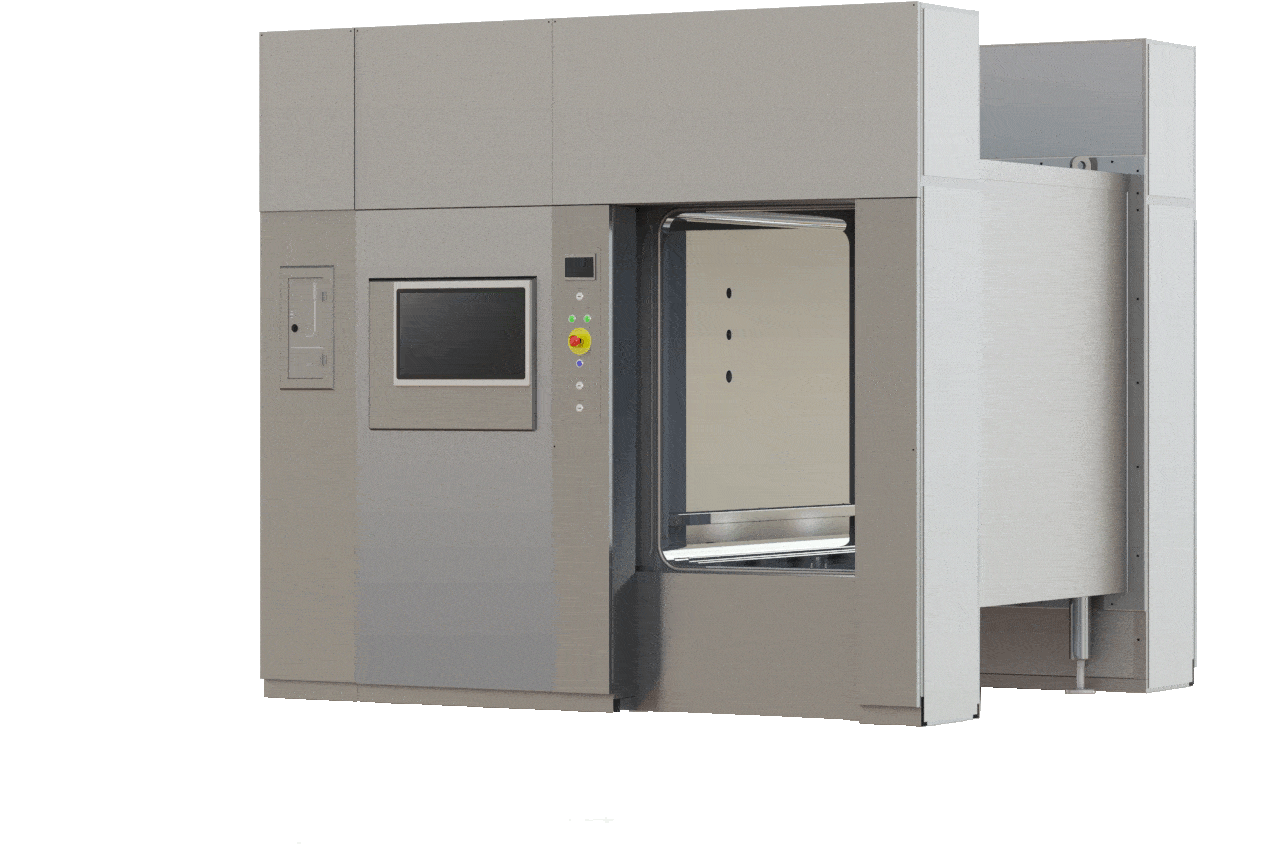
Equipement de décontamination laboratoire, MICRO30 Actini Group

What is biowaste decontamination?

Decontamination aims to eliminate, inactivate, or reduce contaminants present in a fluid, on a surface, or in equipment. These contaminants may be biological, chemical, or radioactive. This process is essential to ensure the sanitary safety of industrial processes. It also prevents any risk of contamination to the environment or finished products.

At Actini Group, we design BSL1, BSL2, BSL3 & BSL4 effluent decontamination equipment certified ISO 14001. Our systems feature advanced automation and energy recovery, allowing total biosafety control while optimizing efficiency and reliability for your production lines.

What is a Decontamination Cycle?

A decontamination cycle is a carefully organized process aimed at eliminating or reducing contaminants, such as hazardous substances, on surfaces or within an environment. Its goal is simple but essential: to guarantee reliable sanitary safety, protecting people, facilities, and the environment.

Decontamination cycles are never universally standardized: they are defined according to the nature of the contaminants (bacteria, viruses, spores, GMOs, etc.), the volume to treat, and the required biosafety level. In high-containment environments, such as specialized laboratories, cycles may include reinforced processes like controlled thermal decontamination or autoclave sterilization.

Beyond the technical aspect, a well-designed decontamination cycle is primarily a guarantee of trust. It protects operators, prevents cross-contamination, and ensures compliance with biosafety and quality standards.

What is the difference between chemical & thermal decontamination?

Chemical decontamination

Chemical decontamination uses products such as hypochlorite, peracetic acid, or quaternary ammoniums to neutralize pathogens. It works by destroying the cellular components of microorganisms but may leave residues, require rinsing, and present risks to operators and the environment. Despite its effectiveness, this process requires careful management of chemicals and their environmental impact.

Thermal decontamination

Thermal or athermal decontamination relies on heat or physical/mechanical processes, such as steam, VHP/vVHP systems, filtration, or UV. These methods inactivate microorganisms without chemicals, offering an effective, operator-safe, and environmentally friendly solution. Treatment parameters are controlled to ensure maximum sterility, even for the most resistant pathogens, while allowing energy recovery and long-term durability of the installations.

Decontamination equipment for laboratories and industries

Actini Group designs batch or continuous effluent decontamination systems, suitable for daily volumes ranging from 40 to 400,000 liters.

Our goal is simple: guarantee maximum sterility, ensure operator safety, and meet the strictest regulatory requirements.

Our solutions combine thermal and mechanical processes, advanced technologies, and energy optimization. Each installation can be customized to site specifications, confined laboratories, vaccine manufacturers, or biotech industries.

Our range covers all containment levels from P1 to P4 (BSL1 to BSL4) using cutting-edge technology to ensure optimal productivity. Compact design and energy recovery also help reduce the environmental footprint.

Explore our effluent treatment solutions

Models

Daily Capacity

Energy

Design

Technology

KUBE / SINK From 30 to 100 L Electricity Standard Batch
MICRO From 100 to 300 L Electricity Standard Batch
MICROSTEAM From 300 to 1,000 L Steam Standard Batch
MICRO 30 From 1,500 to 3,000 L Electricity Standard Batch
ULTIBATCH From 2,500 to 4,000 L Steam Standard Batch
ULTIMATE / ULTIMATE PLUS From 5,000 to 192,000 L Steam Standard Continuous
BDS From 100 to 16,000 L Steam Pre-designed solution with customization Batch
FDS From 2,500 to over 400,000 L Steam or electricity Pre-designed solution with customization Continuous

Additionally, Actini Group supports clients in defining tailored solutions, including material decontamination airlocks and other equipment needs, with the possibility of providing a quote based on technical and regulatory constraints.

Batch vs continuous decontamination: Key differences

Batch Decontamination

The batch effluent treatment method is particularly suited for facilities where the volumes to be treated are variable or relatively low. It provides real flexibility in managing effluents, especially when the site’s activity is not consistent from day to day.

In practice, the principle is simple: effluents are collected in a tank and then treated in discrete volumes during a complete cycle. Each batch follows its own treatment cycle, with precisely controlled parameters (temperature, hold time, pressure, etc.). This approach allows the treatment to be adapted to the nature of the effluents and to specific sanitary requirements.

This method offers a major advantage: it enables a more customized and precise treatment for each cycle. If conditions change (different type of effluent, variation in microbial load, regulatory adjustments), the system can be adapted accordingly.

However, this method generally requires more space. Storage and treatment tanks are often large enough to manage accumulated volumes before each cycle, which entails a larger footprint that must be considered during facility design.

In summary, batch treatment is a solution that is both flexible and secure, designed to adapt to on-the-ground realities. It prioritizes control and adaptability, at the cost of requiring more space.

Continuous Decontamination

The continuous effluent treatment method is based on a simple principle: treating effluents as they are produced, without interruption. Unlike batch operation, the flow does not stop. Effluents enter, are treated, and are discharged in a constant and controlled manner.

This type of system is particularly suited for facilities where the production of biological, chemical, or industrial waste is high and regular. When there are no pauses in activity and large volumes are generated, continuous treatment provides a smooth and consistent response aligned with the production flow.

One of its major advantages is its ability to handle high flow rates while maintaining constant control of critical parameters (temperature, contact time, pressure, etc.). Effluents do not accumulate—they are immediately processed, reducing the need for intermediate storage and optimizing space.

In practice, continuous treatment offers a reassuring solution for industries where waste generation is consistent (pharmaceutical, biotechnological, or industrial production), as it ensures stable, efficient, and secure waste management.

In summary, continuous operation is the ideal solution when waste production is sustained and constant: it prioritizes flow, performance, and long-term efficiency.

Environmental responsibility & performance of Actini Group equipment

Effective and eco-responsible decontamination with Actini Group

Actini Group decontamination equipment is designed for maximum efficiency while minimizing environmental impact. They safely treat effluents by inactivating or neutralizing contaminants before discharge or further treatment. Advanced technologies optimize energy use and integrate heat recovery systems, reducing the ecological footprint of laboratories and industrial facilities.

Compact, modular, and adaptable to different site needs, these machines guarantee both biological safety and operational performance. They demonstrate Actini Group’s commitment to responsible solutions that combine efficiency, durability, and environmental compliance.

ISO 14001 certified environmental commitment

Actini Group follows a responsible approach aligned with ISO 14001. This certification confirms that the company implements a rigorous environmental management system to minimize the impact of its activities and equipment. Through this approach, Actini Group provides effective decontamination solutions while promoting sustainability, energy recovery, and reduced ecological footprint, consistent with sustainable development goals.

Why choose Actini Group equipment?

Range & Capacities

Effluent decontamination systems meet a wide variety of needs, from small laboratory units to large industrial installations.

  • Laboratories: 30 to 3,000 L/day

  • Industrial: 2,500 to 400,000 L/day

These systems operate in batch or continuous mode, inactivating or neutralizing effluents before discharge or further treatment, complying with strict safety and efficiency standards.

Strengths & Benefits


  • Equipment customization
  • Mastery of thermal processes
  • Energy efficiency and durability
  • Safety, compliance, and environmental protection
Conception 3D d'un autoclave GMP sur mesure et intégration CAO dans une zone de production

High-performance decontamination with our GMP autoclaves

Actini Group designs cGMP decontamination autoclaves, available in standard or custom versions. The company supports clients at every stage of the project, from design to equipment qualification. Proven technology and robust design ensure daily safety, compliance, and reliability.

Adapted to the requirements of the pharmaceutical, cosmetic, and food industries, our autoclaves combine performance and ease of use to meet your most specific needs.

Autoclave sterilization is a key step for decontaminating solid products, waste, and equipment. Actini Group solutions guarantee reliable, reproducible autoclave decontamination, compliant with cGMP standards. Each decontamination autoclave is designed to ensure high safety while optimizing energy and operational performance.

High-performance solutions to optimize industrial wastewater treatment

What is industrial wastewater treatment?

Industrial wastewater treatment involves collecting, treating, and purifying liquid discharges from various industrial processes. The goal is to reduce their environmental impact and ensure compliance with applicable regulations. These waters may contain chemical, biological, or physical contaminants, requiring appropriate treatment methods such as sedimentation, filtration, oxidation, neutralization, and disinfection. Actini Group designs high-performance systems that ensure treated water meets environmental standards. These solutions also optimize energy consumption, reduce operational costs, and enhance site sustainability.

Moreover, these systems can incorporate resource recovery, such as heat or reusable components, and promote eco-responsible practices in industrial processes. Thanks to these technologies, companies can combine operational performance, safety, and environmental responsibility, while ensuring regulatory compliance and minimizing their ecological footprint.

Actini Group’s solution for efficient and sustainable biowaste kill system

To address these challenges, Actini Group offers complete and modular solutions for industrial wastewater treatment. Installations can be designed for varying volumes, from small laboratory units to large industrial capacities, and are tailored to the specific characteristics of each effluent. Using advanced filtration, oxidation, neutralization, and disinfection technologies, these systems ensure efficient depollution in compliance with environmental standards. At the same time, Actini Group integrates devices for energy and resource recovery, providing solutions that are both high-performing, sustainable, and environmentally responsible.

Want to learn more about our decontamination systems?

Our teams support you in designing and supplying complete, customized solutions.
You can request a quote, even for projects with specific requirements. Each project undergoes a thorough analysis to ensure optimal safety, compliance, and performance.