
Autoclave GMP

GMP process equipment for pharmaceutical and biotech manufacturing

Engineering equipment for GMP-regulated processes

In pharmaceutical and biotechnology manufacturing, equipment performance is only part of the equation. Hygienic design, contamination control, process monitoring, technical documentation and qualification requirements must also be considered.

Actini Group designs and manufactures process equipment for GMP-regulated applications, from laboratory and pilot-scale systems to full-scale production installations.

Our engineering teams consider applicable Good Manufacturing Practice (GMP) requirements from the early stages of a project, including material selection, equipment design, instrumentation, testing and supporting documentation.

Key GMP considerations in process equipment design

Good Manufacturing Practice (GMP) requirements provide a framework for consistent pharmaceutical manufacturing and quality control.
For process equipment, the relevant requirements depend on its intended use, product characteristics, contamination risks and the manufacturing environment.
Several engineering considerations are particularly important.

Icone nettoyage & utilités
Hygienic design & cleanability

Material selection, surface finish, piping geometry and component accessibility can all affect how effectively equipment can be cleaned.

Depending on the application, equipment design may incorporate drainable configurations, clean-in-place (CIP) systems or sterilize-in-place (SIP) capabilities.

The appropriate design approach depends on the product, process and contamination control requirements.
Icone services su rsite blkeue
Critical process parameter control

Process equipment must support the monitoring and control of parameters relevant to the manufacturing operation.

These may include temperature, pressure, holding time, flow rate and other process-specific measurements.

Instrumentation, control functions and acceptance criteria are specified according to the intended application.
Icone checklist
Technical documentation & traceability

Equipment documentation plays an important role in the qualification and lifecycle management of pharmaceutical manufacturing systems.

Depending on the project, documentation may include engineering drawings, equipment specifications, material certificates, component documentation, inspection records and test reports.

The required documentation package is defined according to the equipment's intended use and agreed project scope.

From user requirements to equipment qualification

GMP equipment projects involve coordination between engineering, manufacturing, production, quality assurance and validation teams.

Identifying documentation and testing requirements early in the project helps ensure that equipment design and acceptance activities are aligned with the customer’s qualification strategy.

User requirements & equipment design

User Requirements Specifications (URS) establish what equipment must achieve within its intended operating environment.

These requirements provide the basis for defining equipment functions, technical specifications, design criteria and acceptance testing.

Where applicable, design reviews and supporting documentation help demonstrate how the proposed equipment addresses the agreed requirements.

Factory & site acceptance testing

Factory Acceptance Testing (FAT) verifies agreed equipment functions and characteristics before shipment.

Site Acceptance Testing (SAT) covers the checks specified after installation, including relevant connections, equipment operation and interfaces with the facility.

The scope of FAT and SAT is defined according to the project specifications and qualification strategy.

Equipment qualification support

Equipment qualification provides documented evidence that an installation is suitable for its intended use.

Depending on the project, qualification activities may include Design Qualification (DQ), Installation Qualification (IQ), Operational Qualification (OQ) and Performance Qualification (PQ).

ACTINI Group can provide the technical documentation, test records and assistance agreed with the customer to support these activities.

Qualification responsibilities, process validation and the overall GMP compliance strategy are established by the relevant project stakeholders and the equipment operator.

Automation, Electronic Records & Data Integrity

Automation supports consistent process operation by controlling equipment sequences, monitoring operating conditions and recording process data. Depending on the equipment and project requirements, control systems may incorporate:

  • Recipe and cycle management.
  • Critical process parameter monitoring.
  • Process data recording and trending.
  • Alarm and event management.
  • User access controls.
  • Interfaces with plant supervisory systems.

Where electronic records are used for GMP-regulated activities, data integrity and computerized system validation requirements must also be considered. These requirements may include appropriate access controls, audit trails, record retention and system verification, depending on the intended use. Control functions and supporting documentation are specified according to the project’s technical and regulatory requirements.

Automatisation

Process equipment for GMP-regulated applications

ActiniGroup supplies equipment for pharmaceutical and biotechnology processes where hygienic design, controlled operation and supporting technical documentation are important.

Equipment requirements vary according to the application, product characteristics and manufacturing environment.

Icone Stérilisation
Sterilization & thermal processing

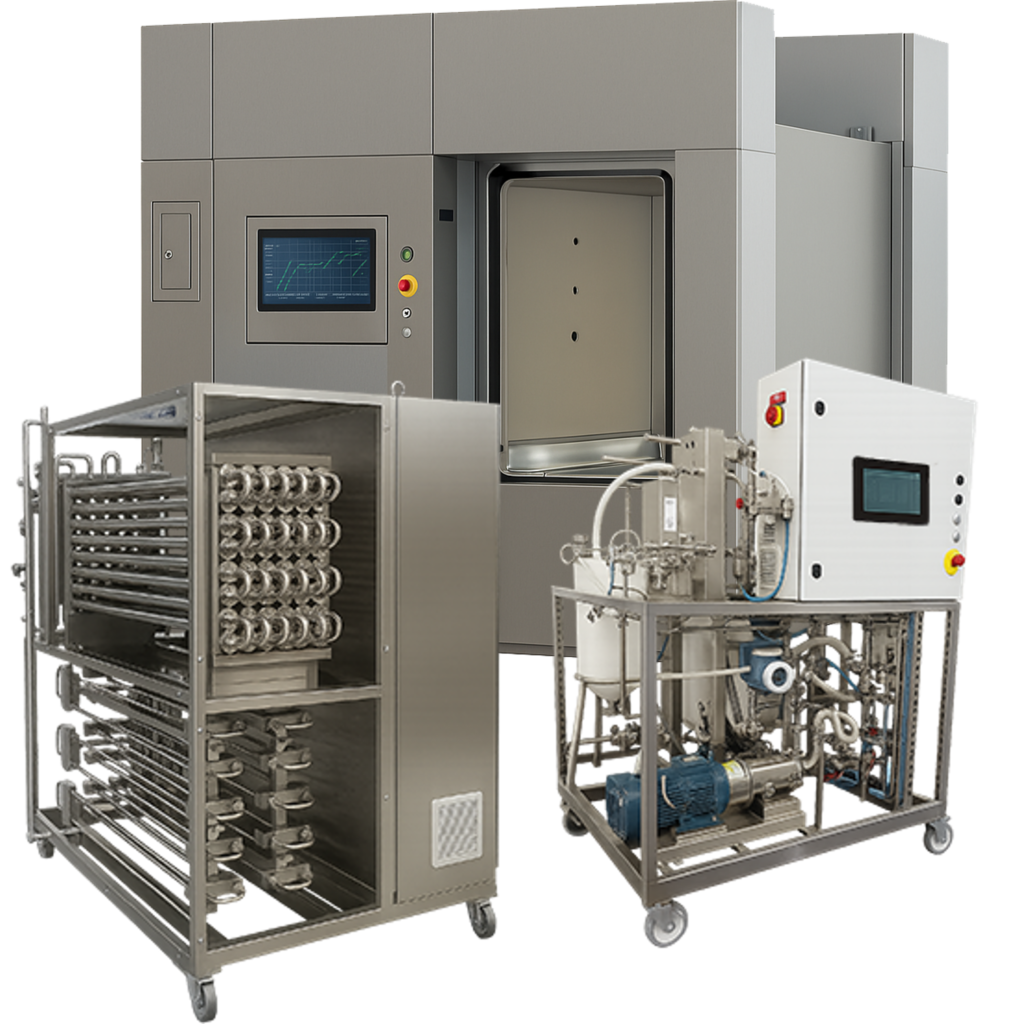
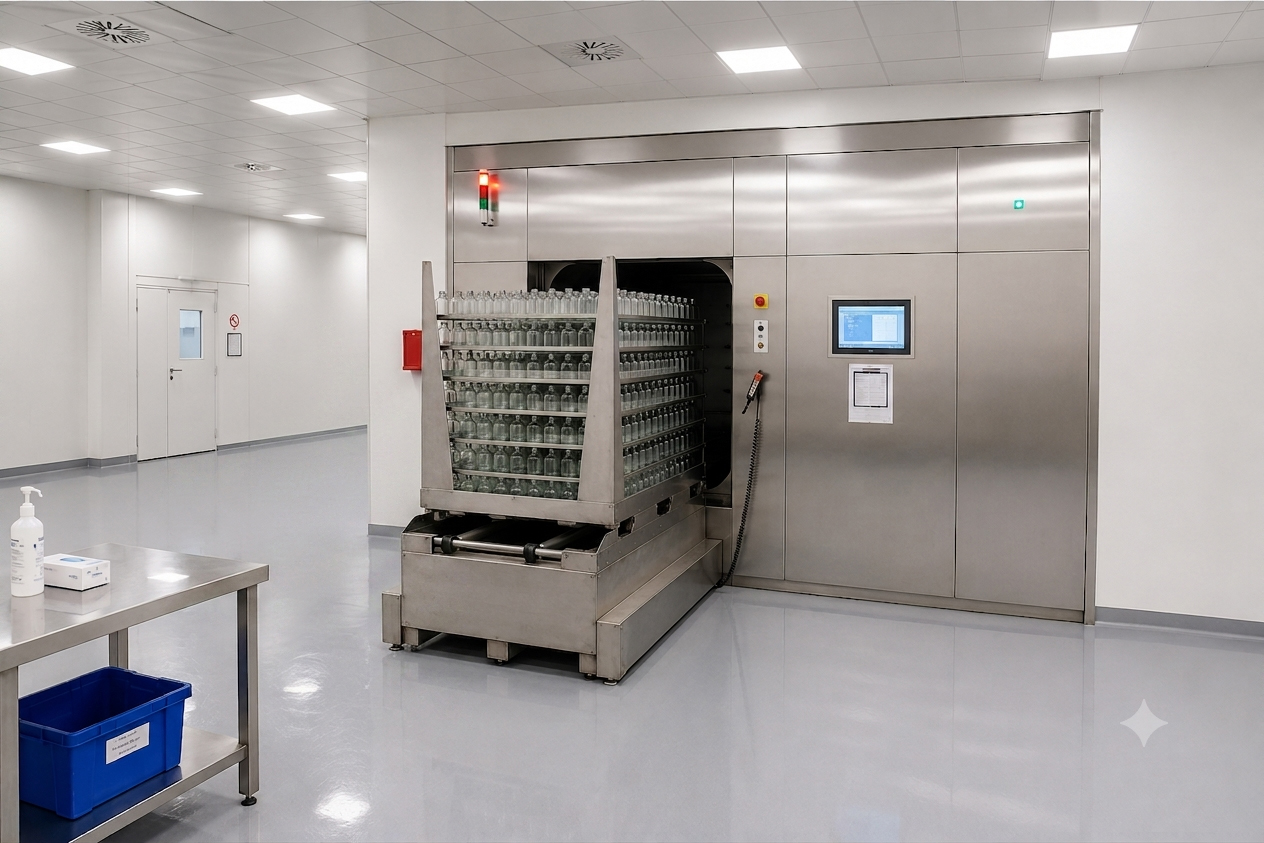
Autoclaves and thermal processing systems designed for applications requiring controlled treatment cycles, critical parameter monitoring and appropriate process documentation.
Icone cuves industrielles
Product preparation & process equipment

Stainless steel process vessels, skids and associated equipment for product preparation, transfer and processing in pharmaceutical and biotechnology manufacturing.

Equipment configurations are developed according to product characteristics, operating conditions and process requirements.
Icone nettoyage & utilités
Cleaning systems & clean utilities

Industrial washers, clean-in-place (CIP) systems and clean steam generators for cleaning, sterilization support and pharmaceutical process utilities.

Equipment specifications depend on the intended application and the facility's technical requirements.
Stérilisation gamme

Defining your GMP equipment requirements

Clear technical specifications help align equipment design, manufacturing, testing and qualification activities.

When preparing a project, the following information should be considered:

  • Product characteristics and the manufacturing process involved.
  • Processing capacities, operating conditions and critical process parameters.
  • Cleaning requirements and, where applicable, sterilization requirements.
  • Materials of construction, surface finishes and process connections.
  • Automation, supervision and electronic data requirements.
  • Technical documentation, acceptance testing and qualification scope.
  • Available utilities and installation constraints.

These inputs provide a common technical basis for the customer’s engineering, production and quality teams and Actini Group’s equipment specialists.

Discuss your GMP equipment project

Are you developing a new pharmaceutical manufacturing installation, expanding production capacity or replacing existing process equipment?

Actini Group can review your process requirements, equipment specifications and qualification needs to help define a solution suitable for your application.

Frequently Asked Questions (FAQ)

What is GMP process equipment?

GMP process equipment refers to equipment used in manufacturing operations subject to Good Manufacturing Practice requirements.

Its design, documentation and verification activities are established according to its intended use, associated risks and applicable regulatory requirements.

GMP compliance depends on the complete manufacturing system, including equipment installation, operation, maintenance, procedures and the site’s pharmaceutical quality system.

What is the difference between GMP and cGMP?

GMP stands for Good Manufacturing Practice.

The term cGMP, meaning current Good Manufacturing Practice, is commonly used in the United States to emphasise compliance with current regulatory requirements and manufacturing practices.

Neither term represents a standalone certification automatically granted to an individual piece of equipment.

Can ACTINI Group support equipment qualification?

Yes. Depending on the agreed scope, ACTINI Group can provide technical documentation, equipment testing and assistance during qualification activities.

Process validation and overall GMP compliance responsibilities remain with the parties designated in the project’s quality and validation strategy.

What is the difference between FAT, SAT, IQ and OQ?

FAT and SAT are equipment acceptance tests performed at the manufacturer’s facility and at the installation site, respectively.

Installation Qualification (IQ) documents that equipment has been installed according to approved requirements.

Operational Qualification (OQ) provides documented verification that equipment operates as intended within specified operating ranges.

These activities serve different purposes, although test results may be leveraged across qualification stages when justified by the approved qualification strategy.

Does all GMP process equipment require the same documentation?

No. Documentation requirements depend on the equipment’s intended use, its impact on product quality, applicable regulations and the site’s risk-based qualification strategy.

The documentation package should therefore be defined for each project rather than assumed to be identical across all equipment.