Automatisation

Process automation, control & traceability

Reliable process control and monitoring for industrial and laboratory equipment

In industrial facilities and laboratories, automation helps manage process sequences, monitor operating conditions and reduce repetitive manual tasks.

Actini Group develops and integrates automation and control solutions into its sterilization, effluent decontamination, fermentation and thermal processing equipment.

Depending on the application, these systems combine programmable logic controllers (PLCs), process instrumentation and human-machine interfaces (HMIs) to provide consistent equipment operation and monitoring of critical process parameters.

Automated control throughout the process

Each piece of equipment follows an operating sequence designed for its intended application. Automation coordinates these steps and monitors the conditions required for the process.

Cycle and sequence management

PLC-based control systems manage process stages such as filling, heating, holding, cooling and draining, where applicable.

Depending on the equipment, automation can also support recipe management, clean-in-place (CIP) and sterilize-in-place (SIP) sequences.

Process parameter monitoring & control

Sensors and instruments provide the data required to monitor and, where necessary, regulate operating conditions.

Parameters may include temperature, pressure, flow rate, liquid level and processing time, depending on the equipment and application.

Alarm management & process safeguards

Automation systems can detect abnormal operating conditions and initiate predefined responses.

Alarm handling, interlocks and shutdown sequences are specified according to the equipment design, risk assessment and operating requirements.

Process data recording & traceability

Traceability provides a record of how a process or operating cycle was performed.

Depending on the equipment and project requirements, recorded information may include:

  • Cycle identification and selected operating recipes.
  • Temperature, pressure and other monitored process values.
  • Cycle start and end times, including individual process stages.
  • Alarm events and operating interruptions.
  • Batch or cycle reports.
  • Data exports to the customer’s information systems.

Data retention, access permissions and reporting formats are specified according to the intended use.

For GMP-regulated applications, additional requirements may apply to electronic records, data integrity and computerised system validation.

Automatisme

Equipment supervision & operational visibility

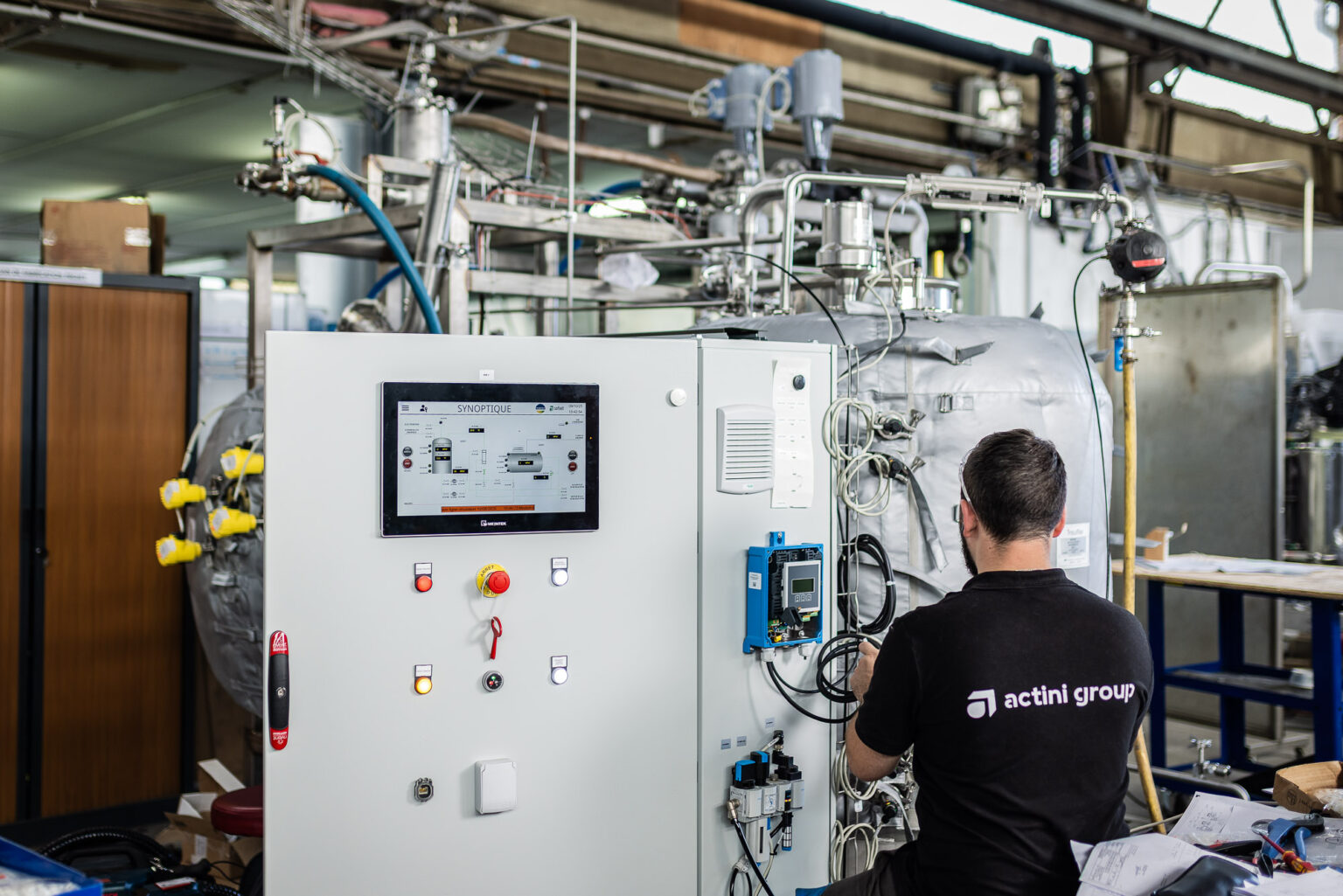
Human-machine interfaces (HMIs) provide operators with access to the information needed to monitor and operate equipment.

Depending on the system configuration, operators can view process status, monitor measured values, select authorised operating cycles and review active alarms.

Real-time process monitoring

Process displays and graphical overviews help operators follow equipment status, operating sequences and key process conditions.

Operating history & process data

Recorded process values and events provide a history of equipment operation.

These records can support troubleshooting, process reviews and the documentation of completed operations.

Integration with plant control systems

Where required, Actini Group equipment can be engineered to communicate with existing plant supervision or control systems.

Communication protocols, data exchange requirements and access arrangements are defined during the project engineering phase.

Automation designed around Actini Group equipment

Automation requirements vary considerably depending on the process, equipment configuration and operating environment.

Icone Stérilisation
Sterilization systems & autoclaves

Automated control supports the management of sterilization recipes, operating sequences and critical cycle parameters.

Depending on the system, functions may include user access management, cycle reporting and interfaces for equipment supervision.
Explore our sterilization equipment
Icone décontamination bleue
Biological effluent decontamination systems

Automated Effluent Decontamination Systems (EDS) manage treatment sequences and monitor the critical conditions required for thermal decontamination.

Depending on the installation, control functions may also cover effluent collection, temporary storage, treatment and discharge conditions.
Explore our effluent decontamination systems
Icone bioréacteur fermenteur
Fermenters & bioreactors

Fermentation control systems monitor and regulate parameters such as temperature, pH, agitation and dissolved oxygen, depending on the application.

Control and recording functions are tailored to the needs of research laboratories, process development facilities and industrial biomanufacturing.
Explore our fermentation equipment
Automatisme

Defining automation requirements at the engineering stage

Automation requirements should be established early in equipment design, alongside the process and operating specifications.

Key considerations include:

  • Operating sequences and required control modes.
  • Parameters to be measured, controlled and recorded.
  • Alarms, interlocks and required equipment responses.
  • Operator interfaces and user access requirements.
  • Process data retention and reporting needs.
  • Communication with other equipment or plant systems.
  • Testing, documentation and applicable qualification requirements.

These specifications help define a control system architecture suited to the equipment and its operating environment.

Discuss your process automation requirements

Are you developing a new processing installation or planning to upgrade the control system of existing equipment?

Actini Group can assess the automation, monitoring and traceability functions required for your application as part of its equipment engineering and integration services.

Frequently Asked Questions (FAQ)

What is the difference between process automation and supervision?

Process automation controls equipment operation and executes predefined sequences.

Supervision provides visibility into operating conditions, process events and equipment status. Depending on the system and user permissions, supervisory interfaces may also allow operators to interact with the process.

Which parameters can Actini Group equipment monitor?

Depending on the application, Actini control systems can monitor or regulate temperature, pressure, flow rates, levels, processing times and other process-specific variables.

Fermentation applications may also require pH and dissolved oxygen monitoring.

How are process and batch data recorded?

Depending on the system configuration, process data can be recorded automatically and made available through operating histories, trend displays or batch and cycle reports.

The information recorded, reporting formats and retention arrangements are specified according to project requirements.

Does an automated system automatically meet GMP requirements?

No. Automation can support process control and documentation, but GMP compliance depends on the intended use, system design, qualification and validation activities, operating procedures and the manufacturer’s quality management system.

Can Actini Group equipment communicate with an existing plant SCADA system?

Depending on the equipment architecture and available interfaces, integration with a plant supervisory control and data acquisition (SCADA) system can be evaluated.

Feasibility depends on communication protocols, control architecture, data exchange requirements and applicable cybersecurity constraints.