Cleaning & industrial utilities

Cleaning & industrial utilities

Industrial cleaning, clean steam, and critical utility solutions for demanding industries

Actini Group designs and manufactures industrial cleaning and utility production equipment for environments where contamination control, regulatory compliance, and process reliability are essential. Our solutions support the pharmaceutical, biotechnology, cosmetics, and food and beverage industries in managing their cleaning, sterilization, and critical fluid control operations. They help ensure controlled production conditions while optimizing operational performance and energy consumption.
Steam sampler - échantillonneur de vapeur Actini Group croquis

Why are utilities critical in a GMP environment?

In GMP environments, critical utilities such as clean steam, process water, and CIP/NEP systems directly contribute to product quality and safety.

Effective management of these utilities makes it possible to:

  • guarantee the quality of manufactured products;
  • meet qualification and validation requirements;
  • facilitate regulatory audits and inspections;
  • minimize the risk of contamination;
  • ensure the availability of production equipment.

The performance of utilities is therefore an essential element of regulatory compliance and the reliability of industrial processes.

Why are industrial utilities essential?

Utilities encompass all the fluids and services necessary for the operation of production facilities.

They include, in particular:

  • clean steam;
  • process water;
  • clean-in-place systems;
  • sampling and monitoring equipment;
  • associated distribution networks.

Effective management of these utilities directly contributes to microbiological safety, product quality, and compliance with industrial processes.

What is cleaning in a regulated environment?

In industries with high sanitary standards, cleaning is an essential step in the manufacturing process.

Production equipment, tanks, transfer systems, and heat treatment facilities must be cleaned effectively and consistently to prevent cross-contamination, maintain product quality, and comply with regulatory requirements.

The performance of a process depends as much on the quality of production as it does on the quality of the cleaning that accompanies it.

Benefits of cleaning-in-Place

Reduced risk of contamination

Procedures are standardized and reproducible.

Time savings

Cleaning is performed without disassembling the equipment.

Optimization of resources

Consumption of water, energy, and chemicals can be controlled.

Traceability of operations

Critical parameters can be recorded and archived.

Improved equipment availability

Downtime is reduced between production cycles.

What factors influence the effectiveness of a CIP cleaning process?

The performance of a cleaning cycle depends on several factors.

The main factors are:

  • the temperature of the solutions;
  • the concentration of the detergents;
  • the duration of the various phases;
  • the flow rate;
  • the design of the equipment;
  • the nature of the residues to be removed.

Balancing these factors ensures effective cleaning while optimizing resource consumption.

How does a Clean-in-Place (CIP) system work?

The principle of clean-in-place is based on the automatic circulation of cleaning solutions through production equipment.

A CIP cycle generally consists of several steps:

  • Pre-rinse
    Removal of the largest residues present in the equipment.
  • Wash
    Circulation of detergent solutions suited to the process and the type of contamination.
  • Rinsing
    Removal of cleaning agents and dissolved contaminants.
  • Disinfection or sterilization
    Depending on the application, an additional step may be implemented to ensure the required level of hygiene.
  • Cycle validation
    Critical parameters can be recorded to ensure the traceability of operations.
Gamme nettoyage et utilités

Why use clean steam?

Clean steam is used in processes that require a high level of microbiological control.

It is used in particular for:

  • SIP sterilization operations;
  • autoclaves;
  • preparation tanks;
  • fermenters;
  • pharmaceutical systems;
  • GMP equipment.

Produced from high-quality water, it helps minimize the risk of contamination while meeting the regulatory requirements for critical environments.

Steam monitoring and sampling

The quality of the steam used in critical processes must be checked regularly.

Sampling systems are used, in particular, to monitor:

  • condensate quality;
  • physicochemical parameters;
  • installation compliance;
  • qualification and validation requirements.

These checks help ensure the safety of production and sterilization processes.

Laveuse industrielle GMP Actini Group

Actini Group cleaning & utility solutions

Clean-in-Place (CIP)

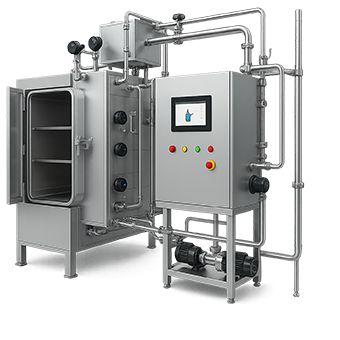
Mobile or automated solutions designed for cleaning production equipment, tanks, fermenters, and process networks.

Clean Steam Generators

Production of high-quality steam for critical processes requiring enhanced microbiological control.

Steam Samplers

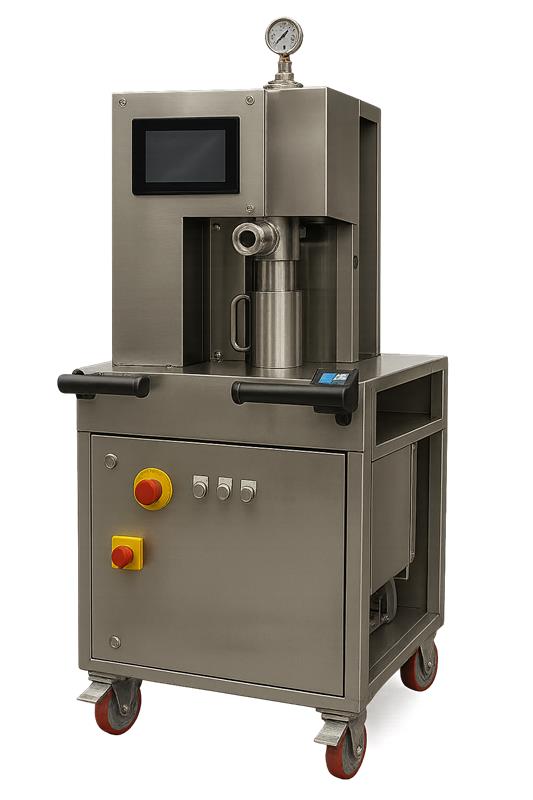
Monitoring and validation of steam quality in regulated environments.

Industrial Washers

Automated cleaning of equipment, accessories, and containers used in production.

The challenges of cleaning in regulated industries

In the pharmaceutical, biotechnology, cosmetics, and food and beverage industries, cleaning is not merely about keeping equipment in good condition. It is an essential step in ensuring product quality, process safety, and regulatory compliance.

Inadequate cleaning can lead to:

  • cross-contamination;
  • production losses;
  • unplanned downtime;
  • non-compliance during audits;
  • product recalls.

Modern cleaning systems help ensure operational safety while improving facility productivity.

Why automate cleaning operations?

Automating cleaning cycles improves the reproducibility of operations while minimizing manual intervention.

Today, manufacturers are seeking:

  • reduced downtime;
  • better control over consumption;
  • complete traceability of cycles;
  • reduced risk of human error;
  • easier compliance during inspections and audits.

Automated systems thus help improve plant availability while ensuring a consistent level of cleanliness.

Cleaning and utilities: major regulatory challenges

In GMP environments, cleaning operations and critical utilities are subject to strict requirements for qualification, validation, and traceability.

Regulatory authorities require manufacturers to demonstrate control over their processes through high-performance equipment and reliable data.

In particular, CIP and SIP systems and clean steam generators must enable:

  • control of critical parameters;
  • recording and archiving of operating data;
  • reproducibility of cycles;
  • performance validation;
  • compliance during audits and inspections.

Rigorous management of utilities thus helps ensure production safety, minimize the risk of non-compliance, and guarantee the quality of manufactured products.

Why choose Actini Group?

Over 70 years of expertise

Actini Group has been supporting manufacturers for over 70 years in thermal processes and critical environments.

Comprehensive process expertise

Our teams are involved from the initial needs assessment through to the commissioning of the facilities.

Solutions tailored to regulated environments

Our equipment meets the requirements of the pharmaceutical, biotechnology, cosmetics, and food and beverage industries.

Standard or custom-built equipment

Each project can be developed according to the client’s technical, regulatory, and operational constraints.

Industrial applications

Actini’s cleaning and utility solutions are used in:

  • the pharmaceutical industry;
  • biotechnology;
  • cosmetics;
  • the food and beverage industry;
  • research laboratories;
  • R&D centers;
  • GMP production facilities.

A question, a need, or a project in mind?

Don’t wait any longer to discuss your industrial ambitions with us.
Contact us today to talk through your ideas and bring them to life. Our team of qualified professionals supports you every step of the way, from design to manufacturing.

FAQ – Cleaning & Industrial Services

What is a CIP or NEP system?

A CIP/NEP system automatically cleans production equipment without the need for disassembly.

Why use cleaning-in-place?

It improves facility hygiene while reducing production downtime.

What is clean steam?

Clean steam is high-quality steam used in critical processes requiring enhanced microbiological control.

What is the difference between industrial steam and clean steam?

Clean steam is produced from water of a quality suitable for pharmaceutical and biotechnology applications.

Why choose Actini Group?

For its long-standing expertise in critical processes, its customized solutions, and its comprehensive project support.

What is the difference between a CIP system and a SIP system?

CIP (Cleaning In Place) cleans equipment, while SIP (Sterilization In Place) sterilizes it using clean steam.

Which industries use clean steam?

Clean steam is primarily used in the pharmaceutical, biotechnology, and cosmetics industries, as well as in certain food processing applications.

What are the criteria for selecting a CIP system?

The choice depends primarily on the type of product, the size of the facility, the desired level of automation, and regulatory requirements.

What parameters should be monitored in a clean steam generator?

The main parameters are feedwater quality, pressure, temperature, condensate quality, and overall system performance.

When should a GMP industrial washer be used?

GMP industrial washers are used for the automated cleaning of parts, accessories, containers, and equipment that require a high level of contamination control.

Why monitor steam quality?

To ensure compliance with sterilization processes and minimize the risk of contamination.

What equipment can be cleaned using a CIP system?

Tanks, transfer lines, heat exchangers, bioreactors, fermenters, and process equipment.

What are the benefits of an automated CIP system?

Cost savings, time savings, improved traceability, and enhanced safety.

Which industries use cleaning and utilities solutions?

The pharmaceutical, biotechnology, cosmetics, food and beverage, and laboratory industries.

Why record cleaning parameters?

Traceability of cycles allows for demonstrating operational compliance during audits and qualification phases.

Does a CIP system help reduce consumption?

Yes. Modern systems optimize the use of water, energy, and chemicals while maintaining cleaning efficiency.

What is the difference between purified water and clean steam?

Purified water is used in many manufacturing and cleaning operations, while clean steam is primarily used for sterilization and critical processes.

What are the critical utilities in the pharmaceutical industry?

The main critical utilities are clean steam, purified water, water for injectable preparations, clean compressed air, and CIP and SIP systems.

Show filters
Reinitialize filters
4 of 4