Industrial pasteurization solutions

Industrial pasteurization solutions

Pasteurization solutions for the pharmaceutical, biotechnology and food industries

Actini Group designs and manufactures industrial pasteurization systems for the thermal treatment of liquid and semi-viscous products. Our equipment reduces microbial load while preserving the organoleptic, nutritional and functional properties of the treated products.

Available for both small-scale production and high-capacity industrial lines, our pasteurizers meet the highest standards of food safety, energy efficiency and process repeatability. They integrate easily into demanding pharmaceutical, biotechnology, cosmetic and food processing environments.

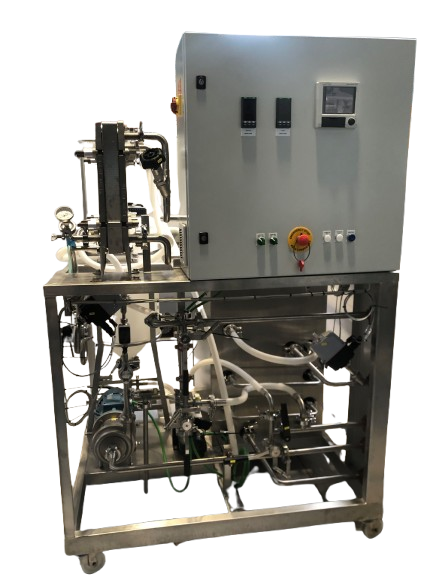
Pasteurisateur Actini Group

What is pasteurization?

Pasteurization is a thermal treatment process that consists of heating a product to a defined temperature for a specific period of time before rapidly cooling it.

Its purpose is to destroy or significantly reduce unwanted microorganisms that may spoil the product or pose a health risk. Unlike sterilization, pasteurization uses lower temperatures to preserve as much as possible the taste, texture, color and nutritional properties of the treated product.

Today, pasteurization is used across many industries, including:

  • dairy products;
  • beverages and fruit juices;
  • plant-based products;
  • sauces and food preparations;
  • biotechnology applications;
  • liquid pharmaceutical products;
  • heat-sensitive ingredients.

What are the main types of pasteurization?

Depending on the product and preservation objectives, different pasteurization methods can be used.

  • Low-temperature pasteurization
    The product is heated at a moderate temperature for a relatively long period in order to minimize product alteration.
  • HTST pasteurization (High Temperature Short Time)
    This method uses a higher temperature for a very short period, achieving effective microbial reduction while preserving product characteristics.
  • Continuous pasteurization
    The product flows continuously through the system and automatically undergoes heating, holding and cooling phases.
  • Batch pasteurization
    The treatment is carried out in successive batches, typically for smaller volumes or specific production requirements.

Why is pasteurization essential in industry?

Controlling microbiological risks is a major challenge in many manufacturing processes. Contamination can lead to production losses, product recalls, regulatory non-compliance and reduced shelf life.

Pasteurization helps secure manufacturing processes by reducing the microbial load present in raw materials or finished products. It also improves product stability while maintaining organoleptic and nutritional qualities.

Thanks to modern thermal processing technologies, temperature and holding time can now be precisely optimized to achieve the best balance between microbiological safety and product quality.

Why pasteurize a product?

Pasteurization serves several key industrial objectives.

Microbiological safety

Reduction of bacteria, yeasts and molds that could compromise product safety.

Extended shelf life

Reduction of the microbial load responsible for product spoilage.

Quality preservation

Maintenance of taste, nutritional and functional properties.

Production standardization

Consistent, repeatable and traceable thermal treatment.

Reduced product losses

Minimization of waste caused by microbiological contamination.

These advantages explain why pasteurization remains one of the most widely used technologies for processing liquid products.

Which products can be pasteurized?

Pasteurization is used for a wide range of heat-sensitive liquid and semi-viscous products.

Food products

  • milk and dairy products;
  • plant-based beverages;
  • fruit juices;
  • nectars;
  • syrups;
  • sauces;
  • coulis;
  • fruit and vegetable purées.

Pharmaceutical products

  • liquid solutions;
  • intermediate pharmaceutical ingredients;
  • preparations requiring microbial load reduction before packaging.

Biotechnological products

  • culture media;
  • fermentation ingredients;
  • solutions used in bioproduction processes.

Each product presents specific viscosity, temperature sensitivity, flow rate and processing requirements that influence the choice of pasteurization technology.

How does a pasteurization system work?

The process is based on three main stages.

1. Heating

The product is heated to the required pasteurization temperature.

2. Holding

The product is maintained at this temperature for a defined period to ensure the effectiveness of the thermal treatment.

3. Cooling

The product is rapidly cooled to preserve its characteristics and limit the risk of recontamination.

Depending on the application, the system may include:

  • tubular heat exchangers;
  • plate heat exchangers;
  • holding sections;
  • energy recovery systems;
  • automation and supervision systems.
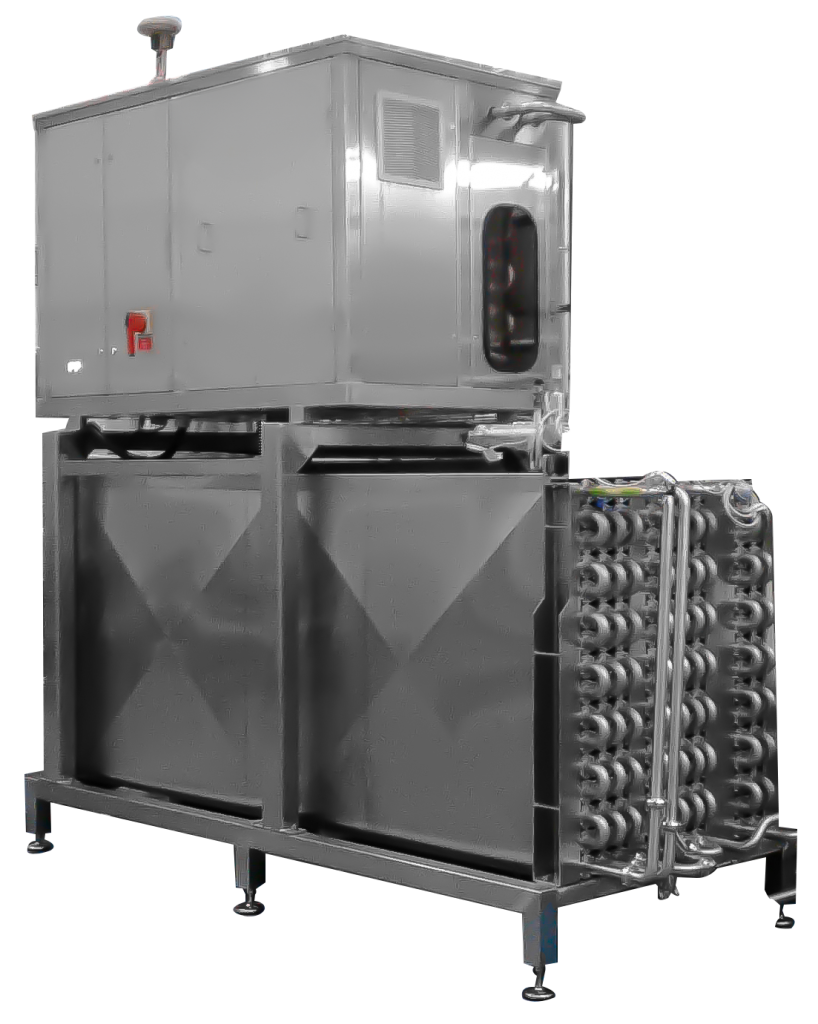
pasteurisateur Actini Group

Benefits of pasteurization

Pasteurization is one of the most widely used preservation processes thanks to its many advantages:

  • improved microbiological safety;
  • extended shelf life;
  • reduced product losses;
  • preservation of organoleptic qualities;
  • improved process control;
  • repeatable and traceable treatment;
  • reduced contamination risks.

Which parameters influence pasteurization?

Pasteurization performance depends on several factors:

  • treatment temperature;
  • holding time;
  • product characteristics;
  • viscosity;
  • initial microbial load;
  • production flow rate;
  • cooling conditions.

Each product therefore requires a specific thermal profile to ensure the right balance between microbiological safety and final product quality.

Pasteurization vs. sterilization: what is the difference?

Although often confused, pasteurization and sterilization serve different purposes.

Criteria

Pasteurization

Sterilization

Objective Reduction of microbial load Complete elimination of microorganisms
Temperature Typically 60–95°C Typically above 100°C
Impact on product Limited More significant
Storage Refrigeration often required Long-term storage possible
Applications Sensitive products Products requiring complete sterility

For heat-sensitive products that require maximum preservation of their characteristics, pasteurization is often the preferred solution.

Actini Group pasteurization solutions

Industrial pasteurizer

Designed for industrial production lines, this pasteurizer provides:

  • automated continuous pasteurization;
  • high-precision thermal control;
  • treatment of sensitive products;
  • integration into existing production lines;
  • optional Actijoule® electric heating technology.

Capacity: 250 to 20,000 L/h.

Pasteurizer for small-scale production

The Eco-Pasto® system was developed for artisan producers, laboratories and small production units.

It offers:

  • compact continuous pasteurization;
  • simplified operation;
  • reduced footprint;
  • optimized energy consumption.

Capacity: 250 to 500 L/h.

Why choose continuous pasteurization?

Continuous pasteurization ensures consistent and repeatable treatment while minimizing production downtime.

Key benefits include:

  • continuous product flow;
  • advanced automation;
  • precise temperature control;
  • energy optimization;
  • suitability for industrial production;
  • full process traceability.

Why choose Actini Group?

70 years of thermal processing expertise

For more than 70 years, Actini Group has been developing thermal treatment solutions for the most demanding industries.

Complete process expertise

Our teams support manufacturers from process design through commissioning and startup.

Innovative technologies

Our systems integrate advanced heat recovery solutions and high-performance thermal control technologies.

Standard and customized solutions

Each project can be adapted according to the product, flow rate, energy constraints and regulatory requirements.

Industrial applications

Actini pasteurizers are used for:

  • dairy products;
  • plant-based beverages;
  • juices and nectars;
  • functional beverages;
  • sauces and coulis;
  • purées;
  • liquid pharmaceutical products;
  • biotechnological products;
  • heat-sensitive formulations.
Pasteurisateur Actini Group

Want to Learn More?

For any questions, quote requests, or upcoming projects, our team of qualified professionals is ready to assist you. We will be happy to advise you and support you at every step.

Don’t hesitate to contact us!

FAQ – Industrial pasteurization

What is pasteurization?

Pasteurization is a thermal treatment process that reduces the microbial load of a product to improve its safety and shelf life.

What is an industrial pasteurizer used for?

An industrial pasteurizer heats and cools a product in a controlled manner to ensure consistent and repeatable pasteurization.

What is the difference between pasteurization and sterilization?

Pasteurization reduces microorganisms, while sterilization aims to eliminate them completely using higher temperatures.

Which products can be pasteurized?

Dairy products, fruit juices, plant-based beverages, sauces, syrups, food preparations, as well as certain pharmaceutical and biotechnology products.

What temperature is used for pasteurization?

Depending on the product, pasteurization temperatures generally range between 60°C and 95°C.

How long does pasteurization take?

The duration can vary from a few seconds to several minutes depending on the product, process and microbiological objectives.

Does pasteurization affect product properties?

Pasteurization is designed to minimize the impact on taste, texture, color and nutritional properties while ensuring microbiological safety.

What is the difference between HTST pasteurization and long-time pasteurization?

HTST (High Temperature Short Time) pasteurization uses a higher temperature for a shorter time, while long-time pasteurization uses a lower temperature for a longer period. Both methods aim to ensure microbiological safety.

Which parameters must be controlled during pasteurization?

The main parameters are temperature, holding time, flow rate, pressure and cooling temperature.

Is pasteurization suitable for heat-sensitive products?

Yes. Because it uses lower temperatures than sterilization, pasteurization is particularly suitable for heat-sensitive products.

Does pasteurization destroy all microorganisms?

No. It significantly reduces the microbial load but does not guarantee complete sterility.

Why is rapid cooling required after pasteurization?

Rapid cooling limits microbial growth and helps preserve product quality.

What are the benefits of industrial pasteurization?

It improves microbiological safety, extends shelf life, reduces production losses and preserves product quality.

Which industries use industrial pasteurization?

Pasteurization is used in the food, pharmaceutical, biotechnology and cosmetics industries, as well as in certain laboratories.

How do you choose an industrial pasteurizer?

The choice depends on the product, required throughput, level of automation and process constraints.

What is the difference between a plate pasteurizer and a tubular pasteurizer?

Plate heat exchangers are suitable for low-viscosity products, while tubular heat exchangers are better suited to viscous products or products containing particles.

Show filters
Reinitialize filters
2 of 2