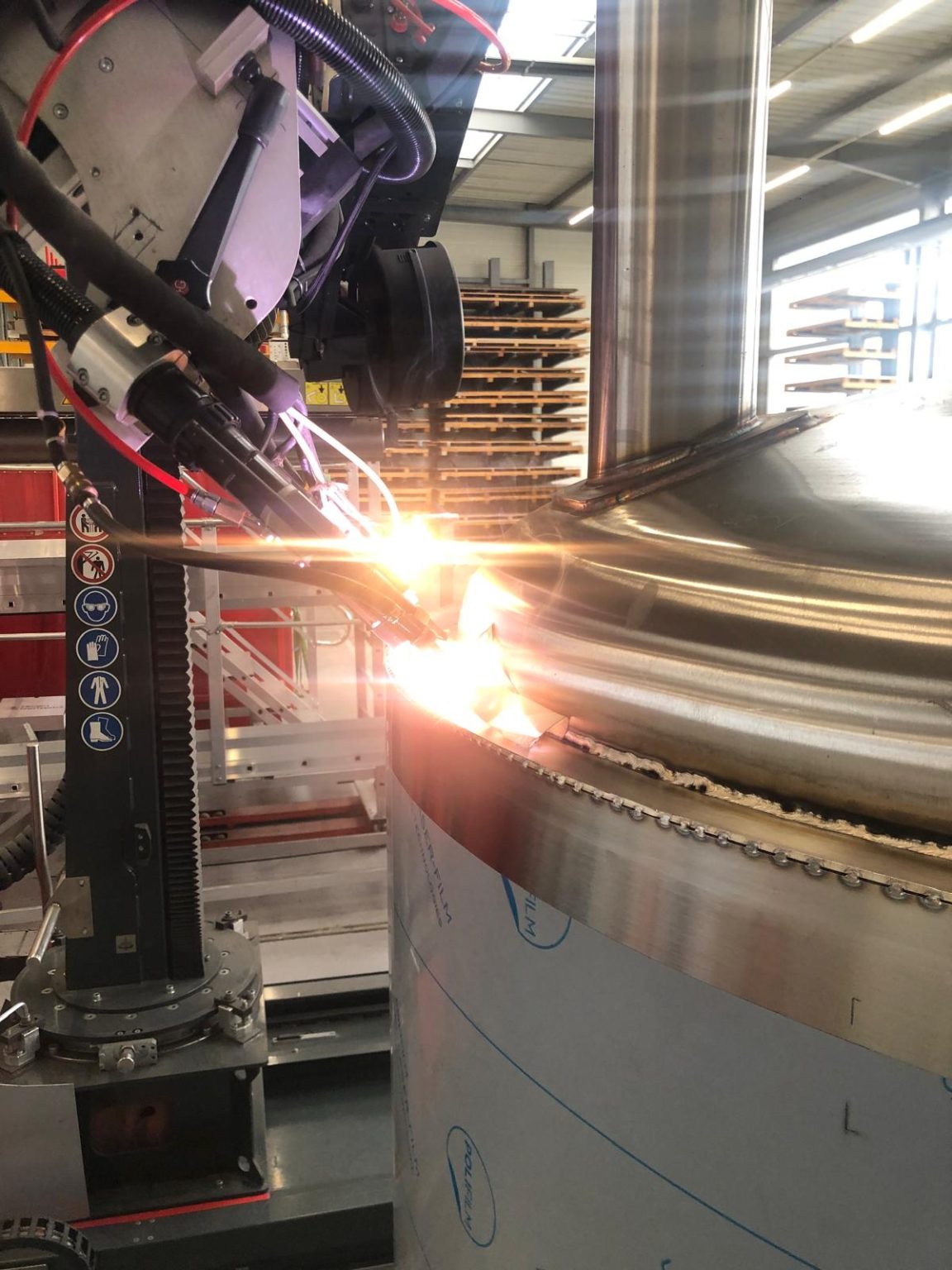
Robot de soudure TCM

Industrial thermal process engineering

Thermal processing designed around your product and process requirements

Industrial and laboratory thermal processes require careful control of heating, holding and cooling conditions. The appropriate operating parameters depend not only on the desired treatment outcome but also on the physical and thermal properties of the product or liquid effluent being processed.

Actini Group designs thermal processing equipment for the pharmaceutical, biotechnology, cosmetics, nuclear and food processing industries, as well as laboratories and pilot-scale facilities. Our engineering approach focuses on understanding each application’s requirements to determine suitable treatment conditions, equipment configurations and processing technologies.

Key parameters in thermal process design

A thermal process involves more than reaching a target temperature. Its performance depends on several interrelated parameters that must be considered during equipment design.

Processing temperature & holding time

Treatment temperature and holding time are established according to the intended process outcome, whether sterilization, pasteurization, decontamination or another thermal operation.

For microbiological applications, these conditions must be consistent with the required microbial inactivation objectives and the process validation approach.

Heating & cooling performance

Heating rates and cooling conditions can affect product properties and overall process performance.

Equipment sizing must therefore account for heat transfer requirements, fluid characteristics and the operating conditions of each treatment stage.

Residence time & flow behaviour

In continuous thermal processing systems, residence time depends on flow rate, equipment geometry and fluid flow behaviour.

Understanding these factors is essential when defining the time a product spends within the heating, holding and cooling sections of a process.

Pressure & fluid properties

Pressure, viscosity, composition and thermal properties can influence both equipment selection and process design.

These factors are particularly relevant when handling viscous, heat-sensitive or otherwise challenging fluids.

Engineering inputs for thermal process design

Two fluids exposed to the same temperature will not necessarily respond in the same way.

Differences in viscosity, composition, suspended solids, heat sensitivity and fouling behaviour can significantly influence heat transfer and operating conditions.

When evaluating a thermal processing application, Actini Group may consider:

  • Physical and thermal properties of the product or effluent.
  • Required treatment volumes and flow rates.
  • Microbiological or functional process objectives.
  • Target temperatures and holding times.
  • Fouling potential and cleaning requirements.
  • Available heating and cooling utilities.
  • Process monitoring and control requirements.

These inputs provide the basis for selecting the processing technology and sizing the equipment.

Bureau d'étude

Actini thermal processing technologies

Actini Group develops and uses a range of thermal processing technologies to address specific heating, cooling and fluid treatment requirements.

Technology selection depends on the characteristics of the product, the operating conditions and the intended processing objectives.

energy
ACTIJOULE® - Electric heating technology

ACTIJOULE® is an electric heating technology developed by ACTINI for applications requiring controlled thermal processing conditions.

Depending on the fluid characteristics and operating requirements, it can be integrated into selected continuous processing systems.
Echange thermique
ACTITUBE® - Tube-in-tube heat exchange

ACTITUBE® is Actini's tube-in-tube heat exchange technology.

Depending on the equipment configuration, it can be used for heating, cooling and heat recovery applications.

Its suitability is assessed according to fluid characteristics, operating temperatures, heat transfer requirements and cleaning constraints.
icone rapide chrono
ACTIFLASH® - Rapid thermal processing

ACTIFLASH® is a technology developed by Actini for specific rapid thermal processing applications.

Its integration depends on the product characteristics, required treatment conditions and overall process design.

These technologies address different technical requirements and are not necessarily interchangeable or available across every equipment range.

From laboratory trials to industrial production

Developing a thermal process may involve laboratory testing or pilot-scale trials before implementation at industrial scale.

Where appropriate, pilot trials can help assess product behaviour, treatment conditions and key operating parameters.

Moving to larger processing capacities may require further evaluation of heat transfer, flow conditions, residence time and utility requirements.

Actini Group offers laboratory, pilot-scale and industrial equipment to support different applications and processing capacities.

Thermal processing applications

Thermal process engineering supports a range of industrial and laboratory applications.

Icone Stérilisation
Sterilization

Thermal process design for applications requiring controlled sterilization conditions, taking into account product characteristics, treatment objectives and validation requirements.
Explore our sterilization equipment
Icone pasteurisateur
Pasteurization

Thermal processing of liquid products with controlled heating, holding and cooling stages.
Equipment is specified according to the required treatment conditions and product properties.
Explore our pasteurization equipment
Icone décontamination bleue
Thermal effluent decontamination

Thermal treatment of biological liquid effluents according to defined microbial inactivation objectives, effluent characteristics and facility requirements.
Explore our effluent decontamination systems

Discuss your thermal processing requirements

Are you developing a new thermal process, upgrading existing equipment or evaluating the thermal behaviour of a product?

Our engineering teams can review your application, processing capacity and operating constraints to help identify a suitable technical solution.

Frequently Asked Questions (FAQ)

What factors influence thermal process design?

The main considerations include the intended treatment outcome, fluid properties, processing capacity, operating temperature, holding time, heat transfer requirements and installation constraints.

Why is residence time important in continuous thermal processing?

Residence time describes how long a product remains within a defined section of the process.

Where treatment requires exposure to a specified temperature for a defined period, residence time and the actual flow behaviour of the fluid must be considered together.

How do you choose between electric heating and steam heating?

The choice depends on required thermal power, operating temperatures, production capacity, available utilities, fluid characteristics and site constraints.

Electric and steam heating offer different engineering and operating considerations, so the most appropriate option depends on the specific application.

Can the same thermal processing parameters be used when scaling up from pilot to industrial production?

Not necessarily. Increasing processing capacity can change heat transfer conditions, flow behaviour, residence time and utility demand.

These factors should be reassessed and, where required, tested or validated at the new operating scale.