Preparation & Fermentation > Bioreactors & Fermenters

Bioreactors & Fermenters

From sterilization to controlled organic cultivation

Actini Group supports biotechnology manufacturers through a major strategic shift: moving from a model based on isolated equipment to one based on integrated, secure, and industrially scalable processes. Beyond the bioreactor, our goal is to enable our clients to control their entire biological value chain, from media preparation to post-culture processing. This approach covers every critical stage of the process: sterilization, inoculation, process control, transfers, cleaning, GMP compliance, and securing downstream operations. Actini Group thus provides a comprehensive solution to the challenges of modern bioprocesses: reducing risks, ensuring batch reliability, facilitating scale-up, and securing industrialization.

Discover our bioreactors and fermenters suited for all production scales

What is fermentation?

Fermentation is a biological process in which microorganisms convert sugars into useful products such as alcohol, lactic acid, or various metabolites, while releasing energy.

In the biotechnology and biopharmaceutical industries, the term “fermentation” is often used broadly to refer to the controlled cultivation of living organisms or cells in a controlled environment: temperature, pH, dissolved oxygen, agitation, nutrients, pressure, gases, antifoaming agents, feeding, and harvesting.

Actini Group fermenters allow for precise control of every parameter in this process, thereby ensuring optimal culture conditions. Thanks to this control, they promote efficient, reproducible production tailored to the needs of both research and industry.

What is it used for?

A fermenter is used to grow microorganisms (bacteria, yeast, fungi) or cells under strictly controlled conditions. It is used to produce substances of interest such as enzymes, antibiotics, proteins, bioethanol, or organic acids.

Fermentation is now central to many industrial sectors: pharmaceuticals (insulin, vaccines, antibiotics), food and agriculture (amino acids, vitamins, flavorings), and green chemistry (production of molecules from renewable resources).

From a biological perspective, fermentation refers to a set of metabolic reactions through which microorganisms break down an organic substrate to produce energy and metabolites of interest. The fermenter, or bioreactor, enables these processes to be replicated and optimized on an industrial scale, within a controlled and reproducible environment, a factor essential to the quality and consistency of production.

Control of process parameters

Each microorganism has its own specific optimal growth conditions. The fermenter therefore allows for precise control of key process parameters to prevent any production stoppages caused by critical deviations:

  • pH: influences cell growth, gene expression, and product stability
  • Temperature: directly affects metabolism and productivity
  • DO (dissolved oxygen): often a limiting factor for productivity, as many microorganisms are aerobic and require oxygen for respiration
  • Agitation: ensures homogeneity of the medium and promotes gas-liquid transfer
  • Aeration/sparging: optimizes O₂ transfer to the medium and CO₂ removal via stripping
  • Foam: uncontrolled foam formation can lead to product loss, contamination, or filter clogging
  • Feeding: a regulated supply of substrate prevents any limitation or inhibition of growth
  • Sterility: a critical parameter, particularly in GMP-compliant production settings

What is the difference between bacterial/microbial fermentation and cell culture?

Type

Operational definition

Organisms/cells

Examples of products

Bacterial/microbial fermentation Culturing bacteria, yeast, or fungi to produce a molecule or biomass E. coli, yeast, filamentous fungi Recombinant insulin, enzymes, vaccine antigens, recombinant proteins, organic acids
Cell culture Culture of animal, human, insect, or plant cells in suspension or on microcarriers CHO, HEK293, Vero, BHK, hybridomas, stem cells Monoclonal antibodies, viral vaccines, viral vectors, complex proteins, cell therapies
Fermenteur autoclavable,de

Beyond the fermenter: mastering the entire biological process

In biopharmaceuticals, process performance is not limited to the fermentation stage. The real value for a customer lies in mastering the entire production chain: preparation and sterilization of media, fermentation or cell culture, harvest, potential viral inactivation, clarification, purification, formulation, and then cleaning and effluent treatment. Each step is interdependent, and a failure at any link can compromise the entire batch. This is why Actini Group positions itself not merely as a supplier of fermenters, but as a partner in securing the entire biological process. This comprehensive approach enables us to meet the strictest requirements for quality, traceability, and GMP compliance, while reducing operational risks at every critical stage of the process.

Practicality & hygiene in daily use

Actini Group equipment also stands out for its practicality and hygiene. The autoclavable fermenter is fully disassemblable, autoclavable, and dishwasher-safe, ensuring safe and efficient daily use.

In addition, the quick and ergonomic snap-on fasteners facilitate assembly and disassembly, optimizing user comfort and operator productivity.

Various types of cultures: from microorganisms to cells

Actini Group fermenter bioreactors support a wide range of microbial and cellular cultures, including:

  • Yeasts
  • Bacteria
  • Fungi
  • Microalgae
  • Animal & plant cells

Fermenters designed to ensure controlled and efficient cultures

Depending on the type of organisms and the culture method, fermentation may last from a few hours to a few weeks

For the culture to succeed, operators must keep the fermenter clean and sterile throughout the entire process.

Microorganisms perform fermentation to convert sugars, and our range of fermenters ensures optimal control of these reactions while meeting the varied needs of industrial and research applications.

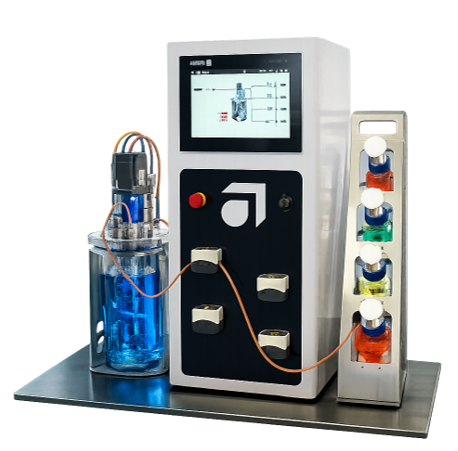
Autoclavable Benchtop Fermenter – Zyma’One

The Zyma’One small-capacity bioreactor (2–8 L) is specifically designed for complete sterilization via autoclave. Compact and reliable, it ensures perfectly controlled culture conditions while meeting the high standards of cleanliness and safety required in academic research and biotechnology.

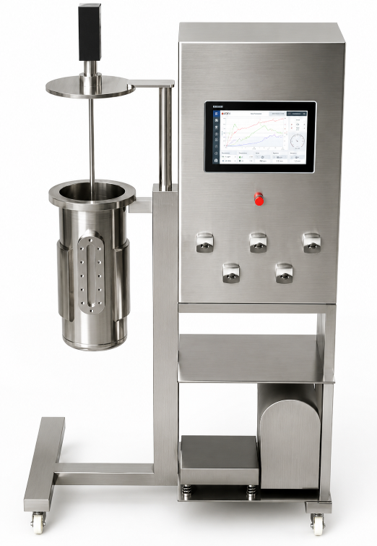
Laboratory-scale SIP/CIP bioreactor – Zyma’Scale

Designed for research and development or pilot production, the Actini Group Zyma’Scale bioreactor offers high control precision and optimal flexibility. Its modular design allows it to adapt to a wide variety of applications. This facilitates the development, optimization, and reproducibility of small-scale processes.

Industrial CIP/SIP Fermenter – Zyma’Flex

Designed for industrial-scale production applications, the Actini Group Zyma’Flex bioreactor meets the demands of the most demanding biotechnology processes. It combines robustness, performance, and precise control of culture parameters. All of this is aimed at optimizing yields while ensuring a high level of safety, traceability, and regulatory compliance.

Have a question, need, or project in mind?

Don’t wait to share your industrial ambitions with us.
Contact us now to discuss your ideas and bring them to life. Our team of qualified professionals will support you at every step, from design to manufacturing.

Show filters
Reinitialize filters
3 of 3