Produits > Effluent decontamination > Laboratory biokill systems > Labs effluent decontamination system – DIRECTSTEAM

Labs effluent decontamination system - DIRECTSTEAM

An Effective Solution for Complex Effluents

Model : DIRECTSTEAM
Capacity: up to 700 liters per day
Technology: Batch
Energy: Steam
Conception: Standard with options

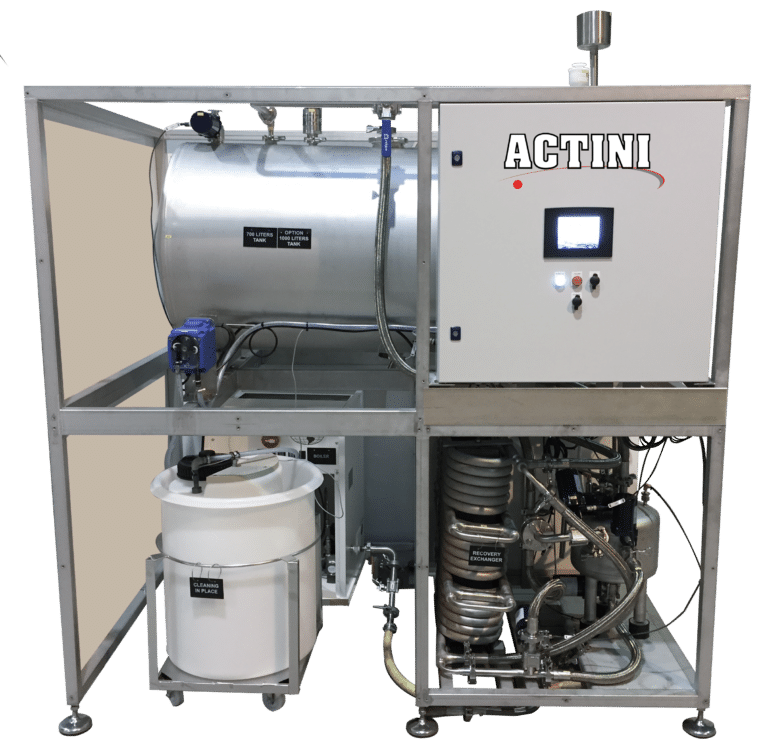
The DIRECTSTEAM is a thermal decontamination system designed for liquid effluents containing particles, viscous phases, or hard-to-treat compounds.

Discover our other effluent decontamination solutions for laboratories

Description

  • Operating with steam, the DIRECTSTEAM decontamination system is specifically designed to treat and decontaminate up to 700 liters of effluents per day.
  • Unlike conventional heating systems, it relies on an innovative technology using our patented tangential steam injection process.
  • This principle allows for faster temperature rise, optimizing energy efficiency and enabling a higher number of treatment cycles per day.

Overview in a Few Lines

This compact unit meets the strictest decontamination standards, providing highly secure effluent decontamination.

  • Patented treatment technology

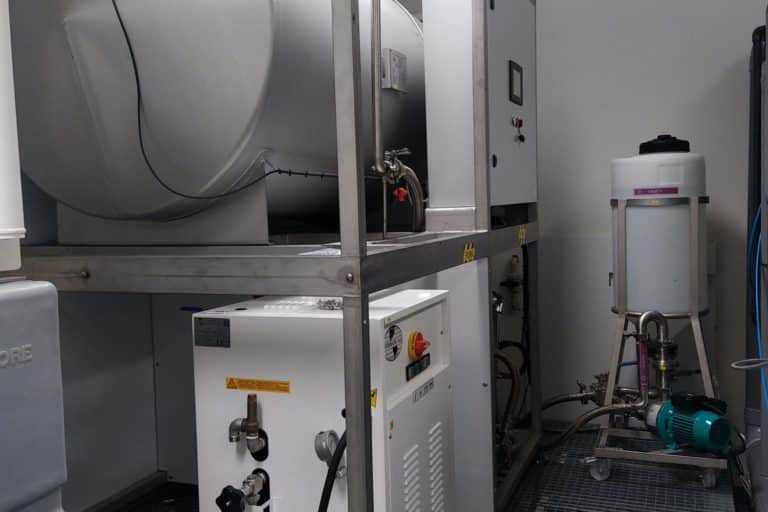
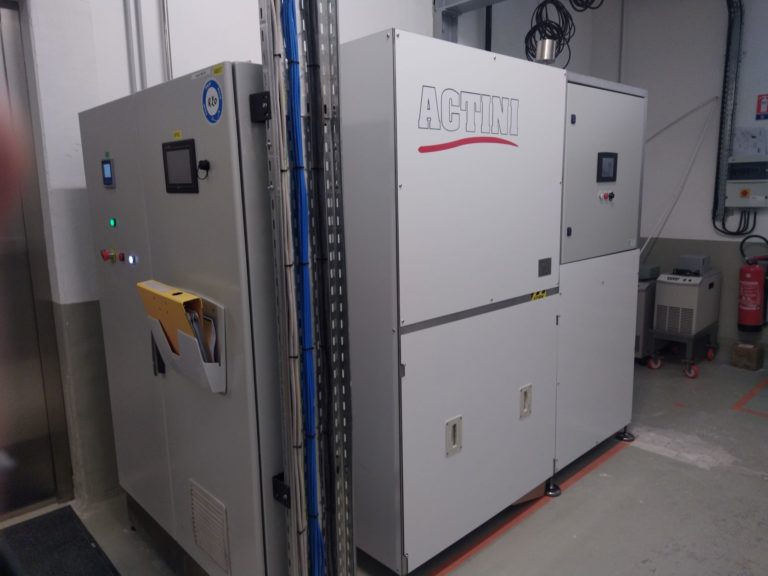
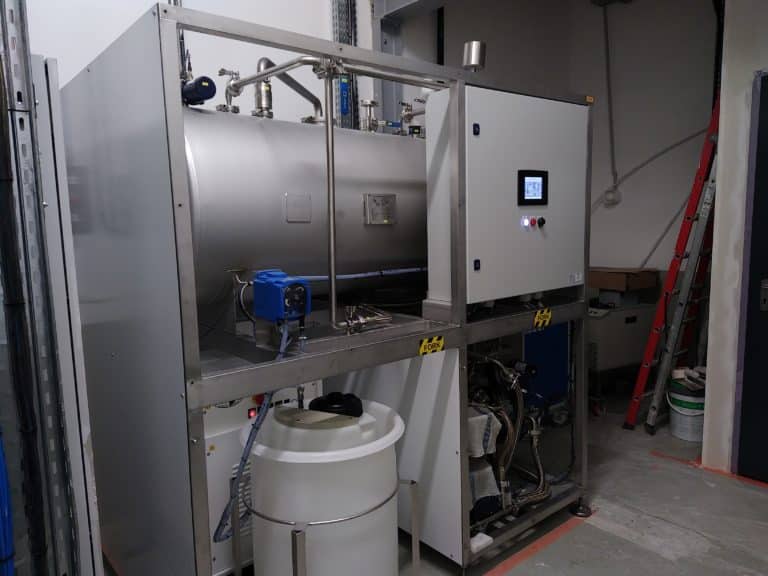
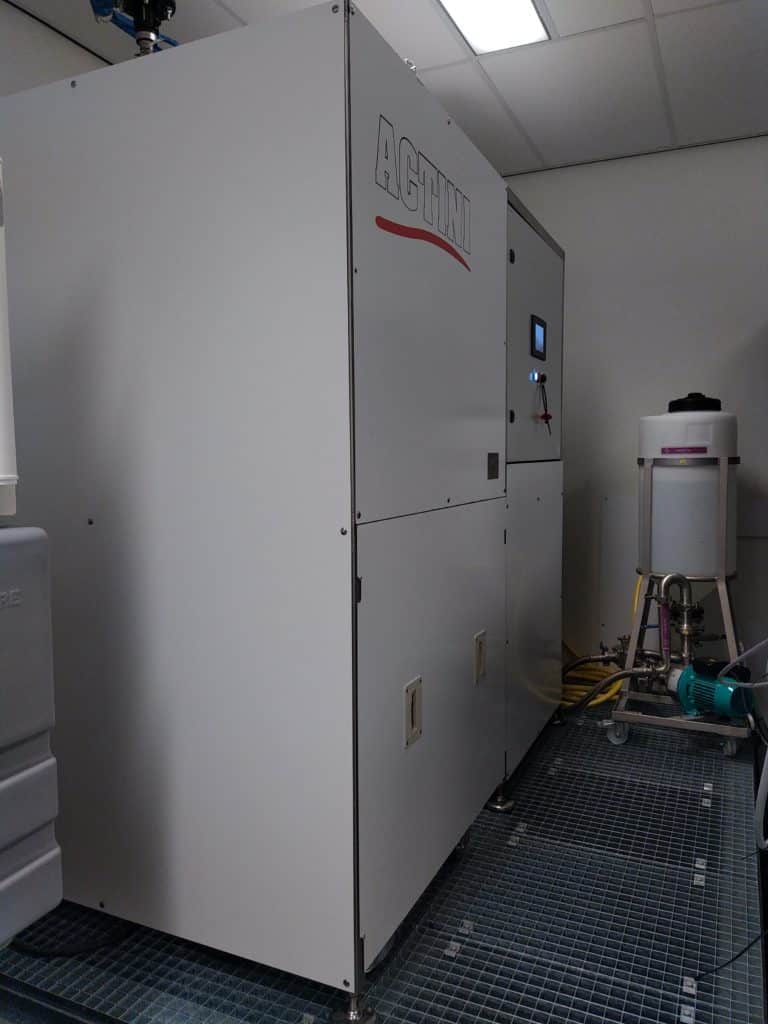
  • Compact unit, integrable within your laboratory or in a basement

  • The system complies with the strictest decontamination standards, ensuring personnel safety. It also reduces the use of chemicals, limiting risks associated with handling them

  • Standardized equipment with short manufacturing time

  • Fully automatic operation, with all cycles managed by the built-in PLC

  • If no steam is available on-site, a steam generator can be integrated

Operation

Continuous agitation

Provided by an integrated recirculation pump and, if needed, a crusher for solid or fibrous effluents, ensuring mixture homogeneity. This also prevents sedimentation and facilitates decontamination.

Tangential steam injection

The system allows rapid, uniform, and controlled heating through instant steam-fluid mixing and optimal heat transfer. It also ensures dynamic agitation throughout the decontamination process.

Complete control of the treatment cycle

Temperature regulation is achieved via an integrated heat exchanger precisely controlling the output. A dedicated control valve prevents any risk of system blockage.

Types of Liquid Effluents

The system is compatible with a wide variety of liquid effluents, including those from biological or organic processes.

  • Agglomerating products: containing particles that may clump together or form deposits (industrial or food processes).

  • Blood residues: from biomedical, food, or pharmaceutical activities, requiring specific handling due to their high organic load.

  • Cell-laden fluids: typically generated during biological cultures, fermentations, or bioproduction processes.

  • Protein-laden fluids: from purification, washing, or preparation of biological samples, with particular viscosity and complexity.

Discover our brochure

DIRECTSTEAM adapts to your needs and environment thanks to its modular options.

The DIRECTSTEAM system can be enhanced with various options to meet the specific needs of each application.

Storage tank containment:

This containment system ensures the safety of the storage tank through a combination of venting, filtration, and a safety valve to prevent accidental overpressure.

Steam management:

This module optimizes steam handling with a set including condensate rinsing, collectors, and safety valves, ensuring safe and efficient direct steam heating.

Crusher:

The integrated crusher reduces the size of solids or debris in the effluents to prevent blockages and ensure optimal fluid homogeneity.

Steam generator:

The integrated steam generator produces the steam required for system operation when site steam is absent or insufficient.

Storage tank containment:

This enhanced version of containment heats the vent filter to prevent any liquid buildup, ensuring consistent performance and extended service life.

Air compressor:

The laboratory air compressor provides the compressed air needed for valve operation and pneumatic functions of the system when an on-site source is unavailable.

Remote access:

The remote access module allows secure system supervision, diagnostics, and maintenance via a connected network, reducing downtime and on-site interventions.

A question, a need, or a project in mind?

Don’t wait to discuss your industrial ambitions with us.
Contact us now to share your ideas and bring them to life. Our team of qualified professionals will support you at every step, from design to manufacturing.

Request a quote